
Familial Chylomicronemia Syndrome Market Size in the 7MM is projected to grow at a significant CAGR over the forecast period of 2026-2036 | DelveInsight
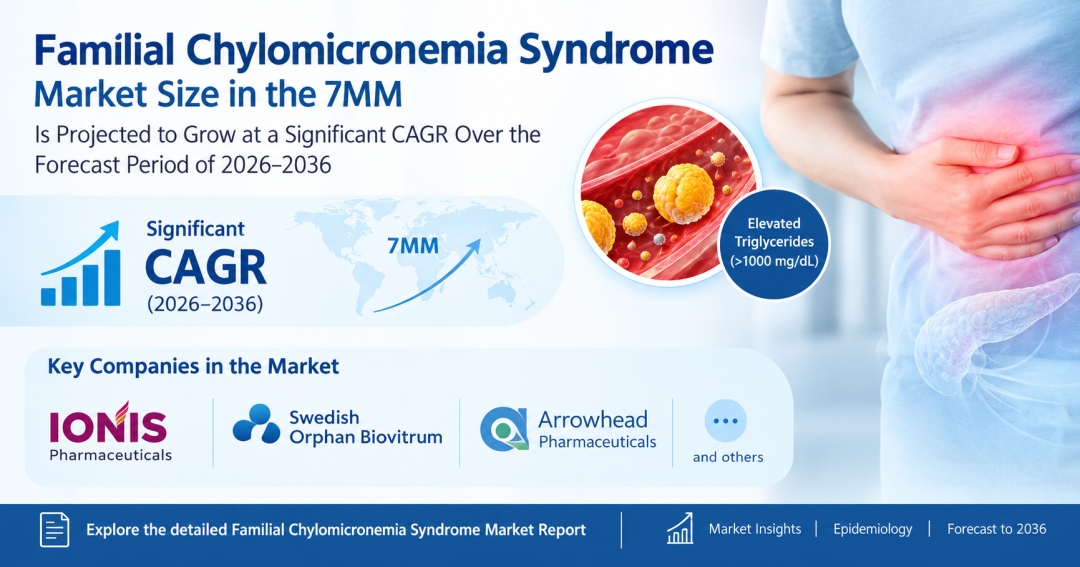
(Albany, US), October 29, 2026 – DelveInsight’s ‘Familial Chylomicronemia Syndrome Market Insights, Epidemiology and Market Forecast – 2036’ report delivers an in-depth understanding of Familial Chylomicronemia Syndrome (FCS), historical and forecasted epidemiology, as well as the familial chylomicronemia syndrome market trends in the United States, EU4 (Germany, Spain, Italy, and France) and the United Kingdom, and Japan.
Explore the intricate details of the Familial Chylomicronemia Syndrome Market Report @ Familial Chylomicronemia Syndrome Treatment Market Size
Key Takeaways from the Familial Chylomicronemia Syndrome Market Report
-
In January 2026, Ionis Pharmaceuticals announced TRYNGOLZA outperformed expectations as the first US FDA approved treatment for FCS, generating USD 105 million in preliminary US net product sales in 2025.
-
According to DelveInsight’s analysis, the 7MM reported approximately 2,100 diagnosed prevalent cases of FCS in 2025, a figure central to understanding familial chylomicronemia syndrome prevalence.
-
In 2025, the US accounted for the highest number of diagnosed prevalent cases of FCS, with more than 1,300 cases, and these cases are anticipated to increase during the forecast period.
-
FCS is a rare autosomal recessive disorder characterized by extremely elevated triglyceride levels, typically exceeding 1000 mg/dL, due to defective lipoprotein lipase (LPL) activity or related genetic mutations.
-
FCS childhood onset is common, with symptoms often appearing in childhood, including recurrent abdominal pain, pancreatitis, eruptive xanthomas, and lipemia retinalis.
-
Current approved systemic therapies include Volanesorsen (WAYLIVRA), Olezarsen (TRYNGOLZA), and Plozasiran (REDEMPLO), which target apoC-III to enhance triglyceride clearance.
-
TRYNGOLZA (olezarsen) is the first-ever treatment approved in the US for adults living with FCS as an adjunct to diet.
-
Despite these advances, residual risk of pancreatitis and other complications persists, highlighting the importance of ongoing monitoring, patient education, and adherence to both pharmacologic and dietary interventions.
-
The leading Familial Chylomicronemia Syndrome companies include Ionis Pharmaceuticals, Swedish Orphan Biovitrum, Arrowhead Pharmaceuticals, and others.
Get a Free sample for the Familial Chylomicronemia Syndrome Market Forecast, Size & Share Analysis Report @ Familial Chylomicronemia Syndrome Therapeutics Market
Familial Chylomicronemia Syndrome Overview
FCS is most commonly known as Lipoprotein Lipase (LPL) deficiency. It is also frequently referred to as Fredrickson Type 1 Hyperlipoproteinemia or Type 1 Hyperlipidemia. This definition of FCS and prevalence context matters for the familial chylomicronemia syndrome market: FCS is a rare genetic lipid disorder characterized by elevated triglyceride (TG) levels due to mutations in the LPL gene. Variants in five other genes, including APOA5, APOC2, GPD1, GPIHPB1, and LMF1, can also lead to FCS. It presents in childhood to early adulthood as severe hypertriglyceridemia (HTG), with fasting plasma TG levels >10 mmol/L. Clinical signs and symptoms include failure to thrive, nausea, vomiting, abdominal pain, lipemia retinalis, eruptive xanthomas on the trunk and limbs, and hepatosplenomegaly. The most severe clinical outcome is acute pancreatitis, which can be life-threatening.
The diagnosis of FCS is primarily based on clinical presentation, laboratory findings, and genetic testing. Diagnosis involves ruling out secondary causes of hypertriglyceridemia such as uncontrolled diabetes, alcohol use, or certain medications. Confirmation is achieved through genetic testing, most commonly of the LPL gene. Early and accurate diagnosis is important to prevent complications, particularly recurrent acute pancreatitis, and to guide appropriate management strategies.
Familial Chylomicronemia Syndrome Epidemiology Segmentation in the 7MM
-
Total Prevalent Cases of FCS
-
Total Diagnosed Prevalent Cases of FCS
-
Gender-specific Diagnosed Prevalent Cases of FCS
-
Age-specific Diagnosed Prevalent Cases of FCS
-
Total Treated Cases of FCS
Download the report to understand which factors are driving Familial Chylomicronemia Syndrome Prevalence trends @ Familial Chylomicronemia Syndrome Epidemiology
Familial Chylomicronemia Syndrome Epidemiology Key Findings
-
In 2025, the US accounted for the highest diagnosed prevalent cases of FCS with more than 1,300 cases, and these cases are anticipated to increase during the forecast period.
-
Approximately 70% of individuals diagnosed with FCS are male, with a median age of diagnosis around 9 years, highlighting its early onset and male predominance.
-
Japan recorded more diagnosed cases of FCS than the UK.
-
In 2025, the diagnosed burden of FCS in the US was higher in the 0–17 years age group compared to individuals aged 18 years and above, indicating a greater concentration of cases in the pediatric and adolescent population.
-
Most patients (>90%) found managing fat intake to be difficult, and 53% experienced symptoms despite adherence to their diets.
Approved Therapies for Familial Chylomicronemia Syndrome
The clinical burden of FCS increases with age, reflecting cumulative exposure to high triglyceride levels and repeated pancreatitis episodes. Patients often require lifelong management, and dietary fat restriction remains the cornerstone of therapy to reduce triglyceride levels and prevent acute pancreatitis. The approved FCS therapies are commercially available through companies including Arrowhead Pharmaceuticals and Ionis Pharmaceuticals, reflecting a targeted, mechanism-driven approach that has transformed management of this previously underserved patient population.
Familial Chylomicronemia Syndrome Drug Analysis and Competitive Landscape
-
Olezarsen (TRYNGOLZA): Ionis Pharmaceuticals and Swedish Orphan Biovitrum
Olezarsen, approved since 2024, is the first therapy proven to significantly reduce triglyceride levels in adults with FCS when used as an adjunct to diet. TRYNGOLZA is an RNA-targeted medicine designed to lower the body’s production of apolipoprotein C-III (apoC-III), a protein produced in the liver that is a key regulator of triglyceride metabolism. FCS clinical studies showed it significantly reduced triglycerides and pancreatitis events, offering a much-needed treatment beyond strict dietary control. TRYNGOLZA has been approved in the European Union (EU) as an adjunct to diet in adult patients for the treatment of genetically confirmed FCS.
-
Volanesorsen (WAYLIVRA): Ionis Pharmaceuticals
WAYLIVRA, developed by Ionis and co-developed by Akcea, is an antisense oligonucleotide that reduces apoC-III production, a key regulator of plasma triglyceride levels. Administered via self-injection, it promotes triglyceride breakdown, potentially lowering fat accumulation and the risk of pancreatitis, a serious complication of FCS. WAYLIVRA obtained conditional marketing authorization in 2019 in the European Union for FCS treatment and has been designated as an Orphan Drug by the European Medicines Agency.
-
Plozasiran (REDEMPLO): Arrowhead Pharmaceuticals
Plozasiran is a small interfering RNA (siRNA) therapy targeting APOC3. It has shown promising efficacy with potentially less frequent dosing and a favorable safety profile. In November 2025, the US FDA approved REDEMPLO as an adjunct to diet to reduce triglycerides in adults with FCS.
Discover more about therapies set to grab Major Familial Chylomicronemia Syndrome Market Share @ Familial Chylomicronemia Syndrome Market Drivers and Barriers
Familial Chylomicronemia Syndrome Market Outlook
The treatment landscape for FCS has begun to evolve after years of dependence on strict dietary fat restriction and limited pharmacologic options with modest efficacy. Historically, management focused on preventing acute pancreatitis through lifestyle interventions and off-label lipid-lowering agents, but recent advances in RNA-targeted therapies have significantly altered the therapeutic outlook for the familial chylomicronemia syndrome treatment market. Antisense oligonucleotide therapies such as Volanesorsen marked an early breakthrough by targeting apoC-III, thereby reducing triglyceride levels in patients with genetically confirmed FCS. Building on this mechanism, newer agents like Olezarsen and Plozasiran are advancing with improved safety profiles and dosing convenience, reflecting a shift toward more precise and patient-friendly therapies.
Among currently available therapies, next-generation apoC-III–targeting agents such as Olezarsen are expected to account for a significant share of total revenue, driven by improved safety, tolerability, and broader patient adoption compared to earlier therapies. Established treatments like Volanesorsen are anticipated to retain a role in select patient populations, while newer approved options such as Plozasiran are likely to strengthen market competition and contribute to a more diversified and competitive treatment landscape over the forecast period. Stakeholders tracking the frasier syndrome market and owrens disorder market alongside the familial chylomicronemia syndrome market will find this rare-disease landscape a useful reference point.
Familial Chylomicronemia Syndrome Market Drivers
-
Development of targeted therapies: the market is witnessing a shift from strict dietary management to advanced antisense oligonucleotide and siRNA therapies that manage triglyceride levels
-
High unmet clinical need: the severe, recurring risk of acute pancreatitis creates high demand for novel solutions that improve patient outcomes
-
Favorable regulatory support: orphan drug designations and fast-track approvals for rare diseases reduce development barriers and accelerate commercialization
Familial Chylomicronemia Syndrome Market Barriers
-
Residual risk of acute pancreatitis despite treatment
-
Incomplete triglyceride control in some patients
-
Accessibility and high cost of novel therapies
-
Delayed diagnosis and lack of disease awareness
Familial Chylomicronemia Syndrome Treatment Landscape
Treatment of FCS focuses on reducing triglyceride levels to prevent recurrent pancreatitis, primarily through strict dietary and pharmacologic approaches. The cornerstone of management includes following a very low-fat diet, along with avoidance of alcohol and secondary triggers. The current treatment landscape includes targeted therapies that inhibit apolipoprotein C-III (APOC3), a key regulator of triglyceride metabolism. Olezarsen (TRYNGOLZA) is a next-generation antisense oligonucleotide, Volanesorsen (WAYLIVRA) is an earlier APOC3 inhibitor, and Plozasiran (REDEMPLO) is an siRNA therapy targeting APOC3.
To know more about Familial Chylomicronemia Syndrome Companies working in the treatment market, visit @ Familial Chylomicronemia Syndrome Market Access and Reimbursement
Scope of the Familial Chylomicronemia Syndrome Market Report
-
Coverage: 7MM
-
Study Period: 2022-2036
-
Forecast Period: 2026-2036
-
Familial Chylomicronemia Syndrome Companies: Ionis Pharmaceuticals, Swedish Orphan Biovitrum, Arrowhead Pharmaceuticals, and others.
-
Familial Chylomicronemia Syndrome Therapies: Plozasiran (REDEMPLO), Olezarsen (TRYNGOLZA), Volanesorsen (WAYLIVRA), and others.
-
Familial Chylomicronemia Syndrome Market Dynamics: Familial Chylomicronemia Syndrome market drivers and market barriers
-
Familial Chylomicronemia Syndrome Competitive Intelligence Analysis: SWOT Analysis, Conjoint Analysis
-
Familial Chylomicronemia Syndrome Unmet Needs, KOL Views, Reimbursement
Table of Contents
-
Key Insights
-
Report Introduction
-
Executive Summary
-
Key Events
-
Epidemiology and Market Methodology of Familial Chylomicronemia Syndrome
-
Familial Chylomicronemia Syndrome Market Overview at a Glance
-
Disease Background and Overview of Familial Chylomicronemia Syndrome
-
Epidemiology and Patient Population of Familial Chylomicronemia Syndrome
-
Patient Journey of Familial Chylomicronemia Syndrome
-
Marketed Therapies
-
Familial Chylomicronemia Syndrome: Seven Major Market Analysis
-
Unmet Needs of Familial Chylomicronemia Syndrome
-
SWOT Analysis of Familial Chylomicronemia Syndrome
-
KOL Views of Familial Chylomicronemia Syndrome
-
Market Access and Reimbursement of Familial Chylomicronemia Syndrome
-
Appendix
-
DelveInsight Capabilities
-
Disclaimer
-
About DelveInsight
Media Contact
Company Name: DelveInsight Business Research LLP
Contact Person: Abhishek kumar
Email: Send Email
Phone: +19193216187
Address:304 S. Jones Blvd #2432
City: Albany
State: New York
Country: United States
Website: https://www.delveinsight.com/report-store/familial-chylomicronemia-syndrome-market


